 The Royalists
 Local groups
The Royalists are active throughout the United Kingdom. Find all local groups below.
Find your local group
The Sovereign's official work is funded by the Sovereign GrantSovereign GrantThe Sovereign Grant is a payment that is paid annually to the monarch by the government to fund the monarch's official duties, provided for by the Sovereign Grant Act 2011.Source: House of Commons Library, which is set by reference to the profits of the Crown EstateCrown EstateThe Crown Estate is a collection of lands and holdings owned by His Majesty The King in right of the CrownSource: House of Commons Library. It is a subject much discussed and little understood, and one upon which the opponents of monarchy have built a good many of their claims. This page will seek to set out where that money comes from, what it pays for, what the monarchy returns to the nation, and whether a president would serve us more cheaply.
The Crown Estate is a portfolio of property and seabed which belongs to the monarch in right of the Crown. It is not the King's private property, and all of its profit goes to the Treasury. In return, Parliament funds the Sovereign's official duties through the Sovereign Grant, which is set as a share of the Crown Estate's profit from two years earlier.
The tradition of surrendering the hereditary revenues of the Crown Estate dates back to the reign of King George III, when the cost of civil government exceeded profits, generating a personal debt for the Sovereign. To mitigate this, Parliament agreed to accept those revenues in exchange for a fixed annual sum.
Sources: Royal Household, Sovereign Grant accounts to 31 March 2026; HM Treasury, Royal Trustees' Sovereign Grant Review 2026; The Crown Estate, 2025/26 results.
| Grant year | Crown Estate profit | Sovereign Grant | Share | Core grant | Palace reservicing | Left for the Treasury |
|---|---|---|---|---|---|---|
| 2025-26 | £1.1bn (2023-24) | £132.1m | 12% | £72.1m | £60m | £968.9m |
| 2026-27 | £1.15bn (2024-25) | £137.9m | 12% | £97.6m | £40.3m | £1.01bn |
| 2027-28 (planned) | £487m (2025-26) | £99.9m | 20.5% | – | – | £387.1m |
The Sovereign Grant Act 2011 places the grant in the hands of three Royal Trustees: the Prime Minister, the Chancellor of the Exchequer, and the Keeper of the Privy Purse, who manage His Majesty's finances.

Andy Burnham MP
Prime Minister
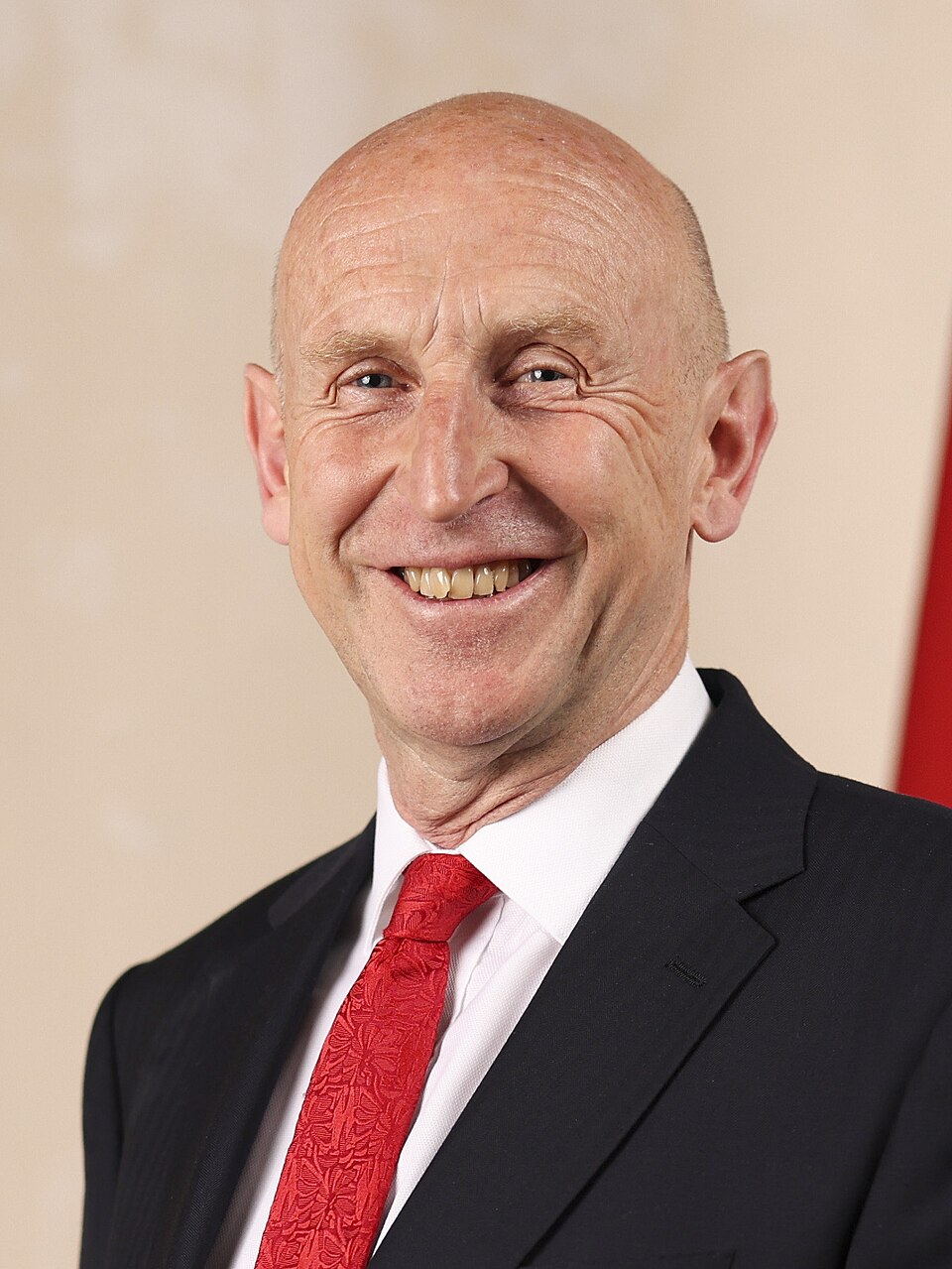
John Healey MP
Chancellor of the Exchequer

James Chalmers
Keeper of the Privy Purse
Every five years the Trustees must review whether the grant's share of Crown Estate profit remains appropriate, and report their findings to Parliament. In the years between, they confirm the grant annually and keep watch over the Household's reserve fund; should that reserve grow beyond half a year's net spending, they may choose to lower the grant in accordance with the Sovereign Grant Act. It is, simply put, a settlement held firmly within the control of Parliament.
For the greater part of the past decade since its inception, the Sovereign Grant barely increased. The first substantial rise was made to pay for the renewal of Buckingham Palace, a building held in trust for the Nation rather than owned by the King in a personal capacity. The second came from a surge in the Crown Estate's offshore wind income, and the grant is due to fall once the palace work is finished.
Sources: Royal Household, Sovereign Grant annual reports 2016-17, 2018-19, 2019-20, 2024-25 and 2025-26; HM Treasury, Royal Trustees' Sovereign Grant Review 2026.
| Year | Sovereign Grant |
|---|---|
| 2015-16 | £40.1m |
| 2016-17 | £42.8m |
| 2017-18 | £76.1m |
| 2018-19 | £82.2m |
| 2019-20 | £82.4m |
| 2020-21 | £85.9m |
| 2021-22 | £86.3m |
| 2022-23 | £86.3m |
| 2023-24 | £86.3m |
| 2024-25 | £86.3m |
| 2025-26 | £132.1m |
| 2026-27 | £137.9m |
| 2027-28 (planned) | £99.9m |
In 2025-26 the Royal Household spent £138.4m on the monarchy's official work. The grant covered £117.2m, and the Household's own income of about £21.3m met the remainder. The highest single cost was the palace reservicing at £39.3m.
Source: Royal Household, Sovereign Grant accounts to 31 March 2026. Reservicing spending sits within property maintenance.
Source: Royal Household, Sovereign Grant accounts to 31 March 2026. Operating expenditure before the Household's own income.
| Category | 2025-26 | 2024-25 | Change |
|---|---|---|---|
| Property maintenance | £67.5m | £41.2m | +£26.3m |
| Payroll | £33.7m | £29.9m | +£3.8m |
| Other expenditure | £9.9m | £8.9m | +£1m |
| Depreciation and amortisation | £5.2m | £4.1m | +£1.1m |
| Travel | £5.1m | £4.7m | +£0.4m |
| Utilities | £5.1m | £6m | −£0.9m |
| Digital services | £5.1m | £4.5m | +£0.6m |
| Housekeeping and hospitality | £3.5m | £3.2m | +£0.3m |
| Other staff costs | £3.3m | £4.1m | −£0.8m |
| Total | £138.4m | £106.6m | +£31.8m |
£1.98
each, for the whole of 2026-27
That is the £137.9m Sovereign Grant shared across the United Kingdom's 69.5 million people. Should Parliament approve the planned reduction, it will fall to £1.44 per person in 2027-28.
Population: Office for National Statistics, provisional mid-2025 estimate (69,487,000).
The nation's centrepiece costs the equivalent of
Two historic private estates provide His Majesty The King and His Royal Highness The Prince of Wales with an income of their own. The Duchy of Lancaster has belonged to the Sovereign since 1399, when it merged with the Crown upon the accession of Henry IV, and pays its surplus into the Privy PursePrivy PurseThe Sovereign's private income, which comes mainly from the Duchy of Lancaster. It meets official costs the Sovereign Grant does not cover, such as the offices of other working members of the Royal Family, as well as private expenses.Source: Royal Household. The Duchy of Cornwall was created in 1337 by Edward III via the Royal Great Charter to provide for the heir to the throne. Neither is funded by the taxpayer, and the King and the Prince of Wales pay income tax on the Duchy income they do not spend on official duties in service to the Nation.
Sources: Duchy of Lancaster annual report 2026; Duchy of Cornwall Integrated Impact Reports 2026 and 2025; Royal Household, Royal Finances paper, June 2026.
| Source of income | Type | 2025-26 | 2024-25 |
|---|---|---|---|
| Sovereign Grant | Public | £132.1m | £86.3m |
| Duchy of Lancaster | Private | £25.2m | £24.4m |
| Duchy of Cornwall | Private | £21.6m | £22.9m |
The King paid £12.9m in tax for 2024-25.
The Keeper of the Privy Purse says that places him among the top 100 taxpayers in the country, going by the annual media league tables.
Sources: Royal Household, Royal Finances paper, June 2026; LBC, quoting James Chalmers.
Republic, the campaign to abolish the monarchy, claims that the royals cost £510.4m a year. It arrives at that figure by adding the Duchies' private income, its own estimate of security costs, which the government does not publish, and a number of other items besides. The Sovereign Grant, being the public money derived from the hereditary revenues of the Crown Estate actually paid for the monarchy's official work, was £86.3m at the time. It is not difficult to see how grossly exaggerated their sums are.
The actual Sovereign Grant
Sources: Republic, 2024 Royal Finances Report, published 23 September 2024; Royal Household, Sovereign Grant Annual Report 2024-25.
| Figure | Amount | What it is |
|---|---|---|
| Republic's claim | £510.4m | Republic's 2024 figure. It adds the Duchies' private income, rent the palaces could charge and its own £150m estimate for security, which the government does not publish. |
| The actual Sovereign Grant | £86.3m | £86.3m in both 2023-24 and 2024-25. It is £137.9m in 2026-27, in the final years of the Buckingham Palace works. |
Every nation pays for its head of state, whether a monarch or a president, and each publishes a different set of costs. These figures are best read as a guide, and the note on each bar in the chart sets out what its figure covers.
Britain's figure also carries the upkeep of the occupied royal palaces, including the £369m renewal of Buckingham Palace. Nor are presidential palaces any cheaper to keep; Germany's renovation of Schloss Bellevue, the President's official residence in Berlin, is expected to cost at least €601m and almost 1.6x the cost of Buckingham Palace's renewal.
Per person, Britain's monarchy costs less than Norway's or the Netherlands'
Sources: Stortinget; Rijksfinanciën; French Senate; Business AM; Bundestag; La Región. Palace works: Royal Trustees' 2016 review; Tagesspiegel. Converted at ECB reference rates for 29 September 2026. Populations from Eurostat, Statistics Norway and the ONS.
| Country | Year | Published figure | In pounds | Per person | What it covers |
|---|---|---|---|---|---|
| Kingdom of Norway | 2026 | NOK 307.71m | £24.3m | £4.31 | Royal allowances and the Royal Court. Police security is paid separately. |
| Kingdom of the Netherlands | 2026 | €60.792m | £52.1m | £2.89 | Allowances, the King's running costs and costs charged by ministries. |
| United Kingdom | 2026-27 | £137.9m | £137.9m | £1.98 | The Sovereign Grant, including palace upkeep. Security is paid separately. |
| French Republic | 2026 | €122.56m | £105.1m | £1.53 | The Élysée's state funding, which now covers some palace security. |
| Kingdom of Belgium | 2025 | €17.2m | £14.7m | £1.24 | The civil list and allowances only. Security and other federal support are paid separately. |
| Federal Republic of Germany | 2026 | €67.4m | £57.8m | £0.69 | The budget of the President and the Presidential Office. |
| Kingdom of Spain | 2025 | €8.43m | £7.2m | £0.15 | The royal household only. The palaces and security are paid separately. |
The nation's profits
£0
earned by the monarchy for Britain since 1 January
Counted at Brand Finance's estimate of the monarchy's net benefit, £197m a year (2023-24).
In 2023 the brand valuation consultancy Brand Finance set the monarchy's economic benefits against its costs for the 2023-24 financial year. It counted those costs very generously indeed, including not only the Sovereign Grant and security, but the Duchies' private income and the rent rates the palaces could charge. Even so, the benefits of the monarchy still outstripped the costs.
The Coronation brought a further, one-off gain. Once the cost of the Coronation itself and its bank holiday had been paid, it was worth another £761m, taking the total for 2023-24 to £958m.
Source: Brand Finance, press release, 6 May 2023. Estimates for the 2023-24 financial year.
| Benefits | Costs | Net benefit | |
|---|---|---|---|
| Every year | £567m | £370m | £197m |
| Coronation year, extra | £1.69bn | £931m | £761m |
| 2023-24 in total | £2.26bn | £1.3bn | £958m |
£8.50
per person each year
"Spread amongst the 67 million people of the United Kingdom, the recurring financial benefits of the Monarchy are estimated to be over £8.50 per person, per year, and the recurring costs are estimated to be approximately £5.50 per person, per year."
— David Haigh, Chairman of Brand FinanceSource: Brand Finance, press release, 6 May 2023.
Brand Finance traces these benefits to nine sources, from Royal Warrants to tourism.
Royal Warrants
Firms that supply the Royal Household can be granted a Royal Warrant and put the Royal Arms on their goods.
Source: Brand Finance, press release, 6 May 2023.
To answer the question, we have made our own estimate of the costs incurred by both a hypothetical republic and the monarchy. We use the figures for 2027-28 onwards, when the renewal of Buckingham Palace is finished and the Sovereign Grant falls to £99.9m.
For the monarchy, we count the Sovereign Grant and the cost of protecting the Royal Family, some £200m a year, and set it against the £567m a year Brand Finance estimates the monarchy brings in. Brand Finance counted the cost of the Royal Family at £370m, including the Duchies of Lancaster and Cornwall and the rental values of the palaces; we have decided to count only the Sovereign Grant and the estimated security costs on account that the income derived from the Duchies is private and taxed.
For the British presidency, we take Germany's presidential office as our model, and add to it all that a republic would incur. There would be presidential elections, which sometimes require a second round of voting; an inauguration for each new president; protection for the president; and protection, allowances and pensions for those who have left office. We surmise that some royal residencies will be transferred to the state in a republic, and would thus still require upkeep. Then there is the cost of the transition itself, which we have amortised over ten years: the referendum needed to abolish the monarchy, a new constitution, litigation over property, and new badges and insignia for the police and armed forces. A president, it hardly needs saying, would bring in none of the monarchy's benefits.
Our estimate, in £m a year from 2027-28. Sources: Brand Finance, press release, 6 May 2023; Royal Household, Sovereign Grant summary 2025-26; House of Commons Library, The Sovereign Grant, 2026; Tortoise Media, As safe as palaces, 2021; Bundestag, 2026 budget for the Federal President; Cabinet Office, costs of the 2019 general election; Electoral Commission, cost of the 2016 EU referendum; House of Commons Library, Public Duty Costs Allowance, 2026.
| Our estimate | Range | |
|---|---|---|
| Benefits (Brand Finance) | +£567m | |
| Sovereign Grant, from 2027-28 | −£99.9m | Published |
| Royal protection | −£100m | £80m to £130m |
| The monarchy, net | +£367m | +£337m to +£387m |
| President's office | −£58m | £10m (Austria) to £105m (France) |
| Upkeep of the former royal residences | −£28m | Published, 2025-26 |
| Elections, per year | −£25m | £19m to £34m |
| Protection for the president | −£20m | £10m to £30m |
| Second round of voting, per year | −£15m | £0 to £17m |
| Former presidents | −£9m | £6m (two) to £12m (four) |
| Inauguration ceremonies, per year | −£0.8m | £0.1m to £3.6m |
| New constitution, per year over ten years | −£13.9m | £1m to £28.8m |
| Litigation over property, per year over ten years | −£15m | £1.5m to £90m |
| New badges and insignia, per year over ten years | −£6m | £4.7m to £7.4m |
| Abolition referendum, per year over ten years | −£12.9m | Based on the 2016 EU referendum |
| A presidency, net | −£204m | −£94m to −£368m |
It follows that the monarchy leaves the nation some £571m a year better off than a presidency would, or £8.20 for every person in the country.
The cost of the change is more difficult to measure. For a new constitution, we assume a citizens' assembly like Ireland's to draft it, and a second referendum to approve the measures, similar to the two-stage route taken in Australia and New Zealand. The abolition of the monarchy would also bring years of litigation over who owns what. The Crown Estate is held in right of the Crown; the Royal Collection is held in trust for the King's successors and the nation; Sandringham and Balmoral are private; and the Duchies are private estates though republicans insist they will be seized by the state.
Greece offers a stark and telling warning. The monarchy there was abolished after a sham referendum in 1974, but it was not until 1994 that the Greek Parliament passed a law transferring the former royal family's private estates to the state, and without compensation. Amongst them were Tatoi, the summer palace outside Athens, the Polydendri estate, and Mon Repos on Corfu, the birthplace of the late Duke of Edinburgh. The family took the matter to the European Court of Human Rights, which ruled in 2000 that Greece had breached their right to the peaceful enjoyment of their property. In 2002, the Court ordered Greece to pay them €13.7m in compensation and costs, a sum it judged reasonably related to the value of the estates. The dispute had run for almost a decade after the law was passed, and for over a quarter of a century after the monarchy itself had been abolished.
Three estates in Greece were enough to occupy the courts for the better part of a decade. The Duchies alone hold nearly £1.8bn in value, and so we have presumed £150m in legal costs and settlements.
Coins, banknotes, stamps and passports would be replaced as they wore out, as they were after Her late Majesty Queen Elizabeth II's death. The cost of rewriting the many laws that rest upon the Crown we have not counted at all, and the scale of that would be very considerable indeed.
Brand Finance's benefits are its estimate for 2023-24. Sources: House of Commons Library, The Sovereign Grant, 2026; Public Accounts Committee, Duchy of Cornwall, 2013; Houses of the Oireachtas, cost of the Convention on the Constitution; European Court of Human Rights, Former King of Greece v Greece, 2002; Duchy of Lancaster accounts, 2026; Duchy of Cornwall accounts, 2025.